
Structural Capacity Limits in High-Growth Corporate Systems
High-growth corporate systems collapse when individual operational capacity replaces explicit governance terms to absorb continuous transactional throughput.

Wall
Four concurrent operational messages request urgent executive intervention at midnight while five cross-functional project decisions wait for approval from earlier that afternoon. When an enterprise expands, the immediate temptation is to absorb incoming operational demands through sheer personal stamina. Leaders extend working hours, speed up response times, and step in to handle minor functional disputes.
That personal elasticity creates a temporary buffer, masking underlying friction in the organization. Operations keep moving only because an individual is acting as an unpriced shock absorber.
Research on allostatic load shows that human biological setpoints degrade under continuous, unthrottled demand. Sustained over-activation of stress response networks alters baseline setpoints, leading to exhaustion. Corporate architecture fails in the exact same pattern when executive energy becomes the main load-transfer mechanism.
As operational friction rises, an elastic leader absorbs the overflow until physical or cognitive capacity breaks. Without explicit operational boundaries, the organization relies on the informal exhaustion threshold of its key operators.

The Transition From Individual To Systemic Boundaries
Early executive leadership relies on personal elasticity to absorb operational friction. In the early stages, this informal absorption preserves speed and flexibility. As transaction volume scales, depending on individual capacity creates severe vulnerabilities.
The organization hits a concurrency ceiling where decision quality drops and operational latency climbs across dependent departments. The leader turns into a structural bottleneck, stalling strategic execution while resolving routine local conflicts.
Replacing personal elasticity with an explicit stated limit converts personal capacity into a fixed structural boundary. A structural limit acts as an objective constraint inside corporate architecture. It defines the maximum transaction volume, decision concurrency, and communication density an executive seat can handle.
When demand hits this boundary, the system automatically rejects or reroutes the excess load. The limit belongs to the corporate architecture itself, rather than reflecting personal willingness.
The setpoint holds.
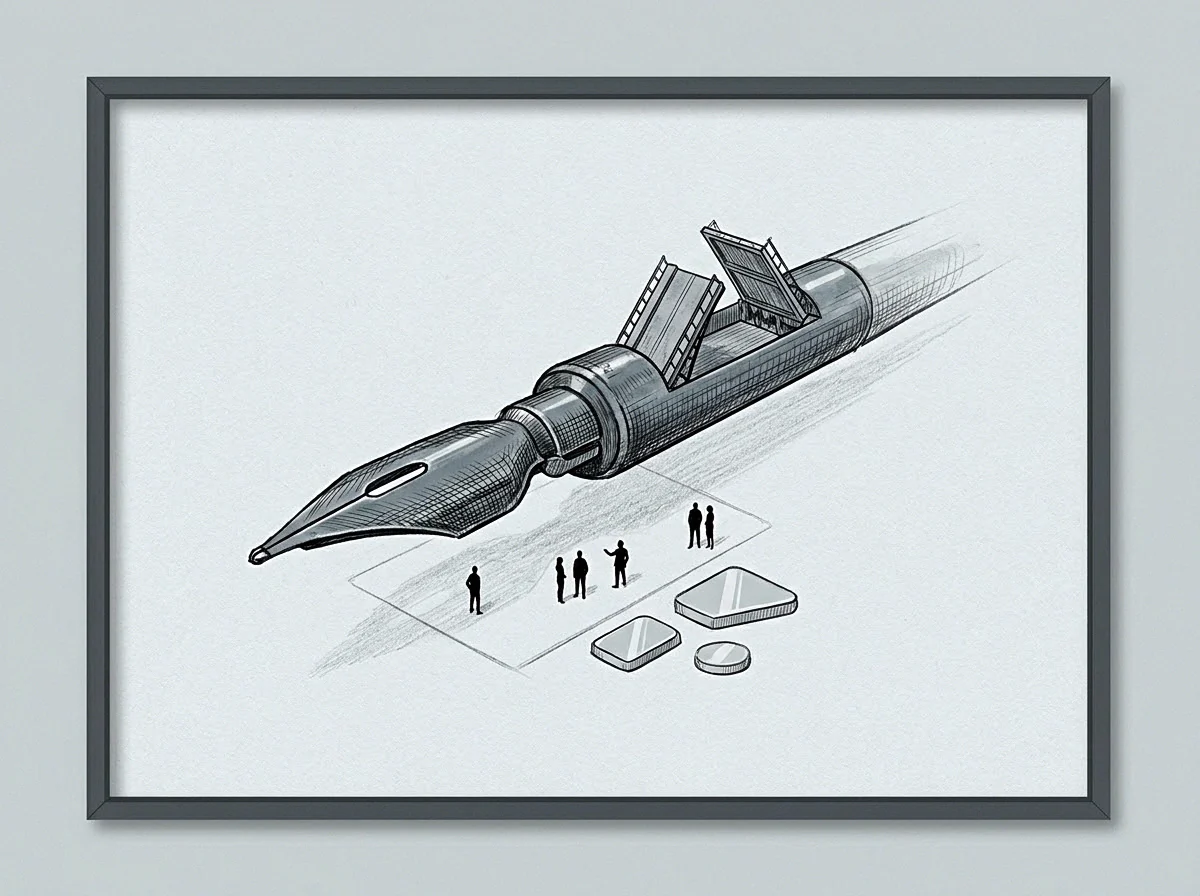
Stated Terms As Structural Circuit Breakers
Governance capacity relies on explicit setpoints that set operational throughput limits. Operating contracts specify exact criteria for decision escalations, communication SLA schedules, and resource allocations. When demand exceeds these setpoints, governance terms act as systemic circuit breakers.
They keep operational surge loads from penetrating executive focus channels. This structural boundary protects high-level strategic capacity from daily transactional noise.
Implementing formal governance terms requires shifting from informal consensus to explicit contract conditions. Operational teams have to resolve routine friction locally instead of escalating unvetted issues upward. When a project team hits a resource conflict, formal terms mandate local resolution or pre-defined mediation protocols.
That requirement forces middle management to build operational competency instead of leaning on executive intervention.
A governance contract specifying fixed operational throughput limits transfers allocation decisions straight back to the requesting system.
Transitioning to formal structural boundaries often meets initial resistance from internal stakeholders used to open executive access. Department heads might view restricted availability as operational disinterest or strategic withdrawal. Clear governance documentation counters this perception by framing capacity limits as structural tools built to maintain organizational throughput.
The seventies-two hour decision throttle condition shifts allocation responsibility back to operational business units.

Ping
Communication volume grows exponentially as corporate headcount expands across functional layers. Direct messaging platforms, email threads, and notification channels generate constant noise. In unmanaged environments, every incoming message carries implicit urgency, demanding immediate executive evaluation.
That message density forces constant context-switching, reducing deep strategic focus to brief intervals between operational interruptions.
Capacity is finite.
Research in cognitive ergonomics confirms that frequent interruptions severely degrade complex problem-solving abilities. Every incoming message forces a context shift, consuming working memory and increasing decision fatigue. When executive attention shifts constantly between micro-operational queries and macro-strategic decisions, cognitive capacity depletes quickly.
The enterprise trades strategic coherence for immediate responsiveness.

Priority Signals Across Communication Channels
Executive attention functions as finite operational bandwidth. Managing that bandwidth demands strict signal classification across communication channels. Continuous message pings signal unstructured communication flows where non-critical queries bypass primary management filters.
Establishing an explicit signal hierarchy separates high-priority strategic indicators from routine updates.
Designing an effective signal hierarchy requires establishing dedicated channels for distinct categories of operational throughput. Emergency escalations require explicit, high-friction routing criteria so that they represent genuine structural failures. Routine status updates move to asynchronous, low-frequency summaries processed in batches during designated administrative blocks.
This separation keeps operational noise from saturating strategic focus zones.
- Continuous Message Interrupts saturate executive cognitive processing and erode long-term strategy.
- Unbounded Availability Mandates encourage middle-tier teams to escalate operational disputes rather than resolve local friction.
- Undefined Latency Expectation turns routine query channels into real-time emergency dispatch mechanisms.
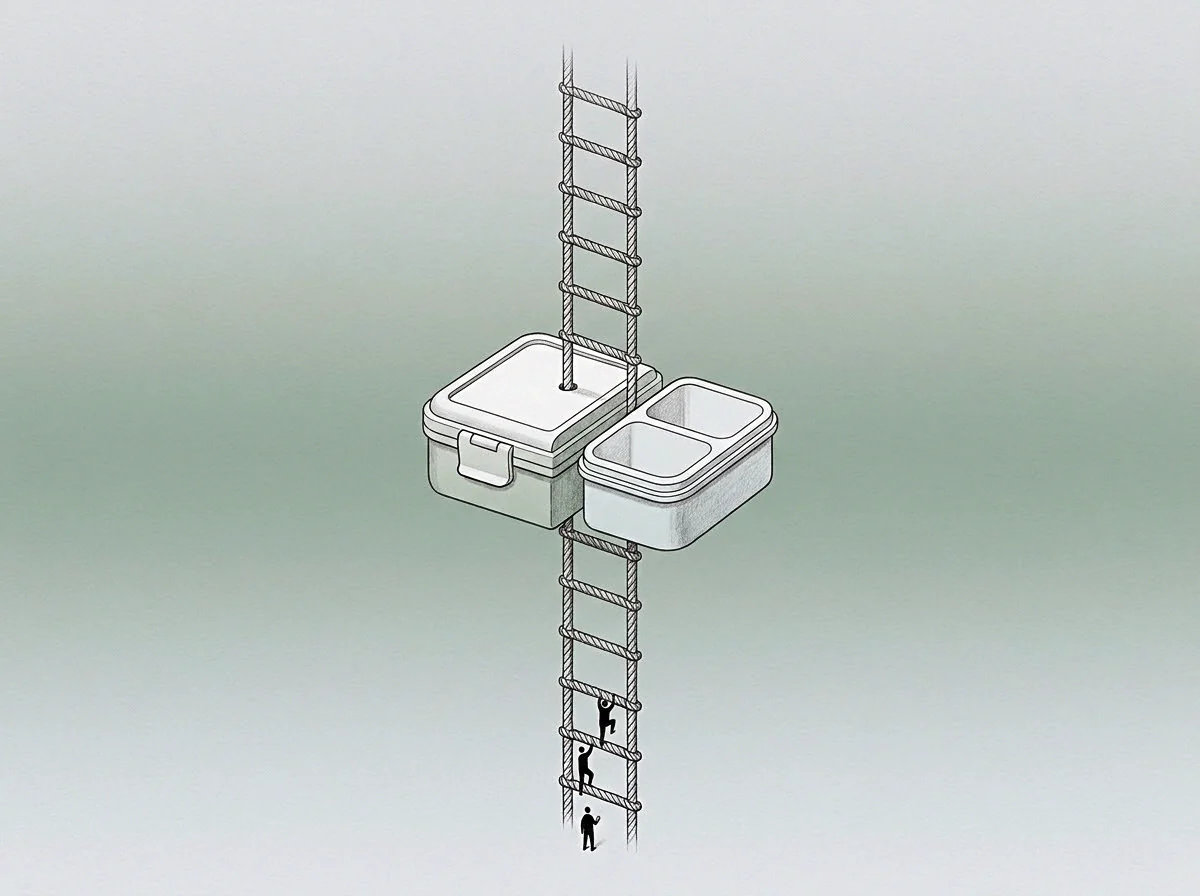
Deriving Availability Through Channel Silence
Non-response acts as a deliberate structural indicator within high-throughput governance. When an executive channel remains quiet during non-emergency windows, downstream teams derive explicit availability parameters. The concept of availability derived means external stakeholders learn operational capacity through system behavior rather than verbal assertions.
Silence signals that local management holds full authority and responsibility for resolving immediate friction.
Limits protect focus.
Establishing deliberate channel silence requires clear operational latency parameters. When team members know an executive reviews escalations only during specific daily windows, they adapt by completing thorough local analysis before submitting queries. This latency buffer filters out transient noise, as many minor friction points resolve locally before the next review block opens.
Channel silence reflects explicit operational terms rather than executive negligence.
The executive channel remains unmonitored during active operating quarters to force local resolution.

Pressure
Systemic load increases rapidly when governance setpoints fail to throttle transactional volume. In fast-growing enterprises, operational expansion creates structural stress across management layers. Without explicit capacity limits, this stress concentrates at the executive level, degrading performance and causing operational gridlock.
Social baseline theory shows that human beings use social and environmental proximity to distribute regulatory load. Laboratory experiments show that reliable structural boundaries reduce cognitive effort and neural resource expenditure during high-stress tasks. When corporate systems lack clear structural boundaries, individual leaders carry the entire weight of organizational coordination.
This structural flaw forces individuals to absorb system-level friction, leading to severe biological and operational strain.

Why Does Organizational Concurrency Collapse Under Unmanaged Scale?
Parallel decision streams create significant cognitive overhead for leadership teams. When an enterprise attempts to process too many concurrent strategic initiatives without capacity boundaries, decision velocity drops dramatically. Each active thread competes for limited executive attention, leading to decision queues, missed dependencies, and execution delays across departments.
The wall remains.
Organizational concurrency limits define the maximum number of major strategic initiatives an enterprise can execute simultaneously. Exceeding this limit causes immediate systemic gridlock. Project teams wait for approvals, cross-functional dependencies stall, and strategic alignment deteriorates.
Establishing strict concurrency throttling forces leadership to prioritize initiatives, ensuring active projects receive required resources and attention.
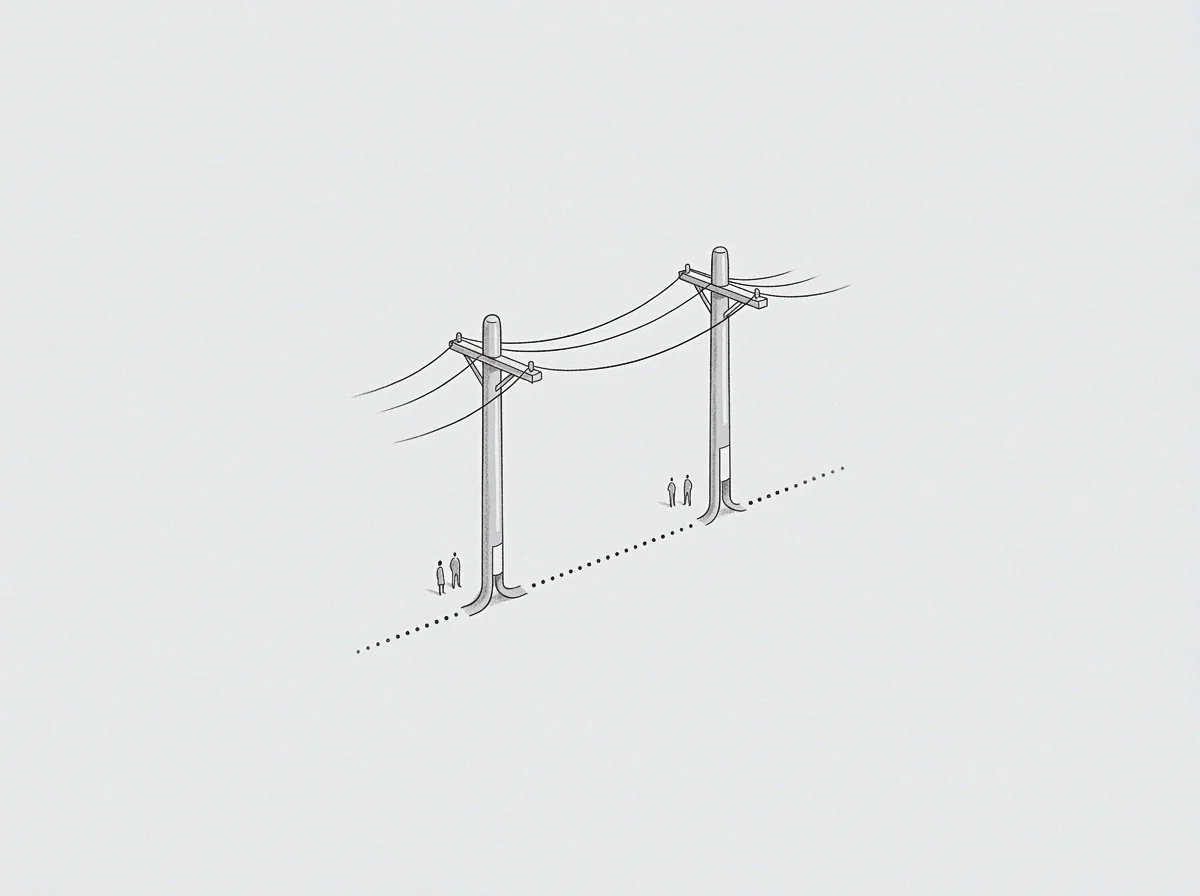
State Against Mood In Systemic Overload
Organizational throughput reflects operational variables rather than subjective emotional energy. Distinguishing between system state and executive mood is essential for capacity management. State represents the objective transfer function of the organization, determined by headroom, active load, open loops, and resource allocation.
Mood represents temporary emotional output that carries no systemic information about structural capacity.
Pressure tests boundaries.
Evaluating capacity through objective state variables prevents misinterpretation of systemic friction. An executive may feel energetic while the underlying system operates far beyond its concurrency limits. Conversely, an executive may experience temporary fatigue while corporate architecture functions with optimal throughput and clear setpoints.
Managing capacity requires evaluating structural variables rather than relying on personal emotional states.
System state governs whether specific corporate actions can execute successfully. A state-gated act depends entirely on system headroom and available resource capacity. No amount of executive decision-making or willpower can produce a state-gated act if structural capacity does not exist.
Conversely, a decision-gated act requires only executive authorization to proceed. Conflating state-gated acts with decision-gated acts leads to unrealistic strategy execution and severe resource exhaustion.
When incoming operational load exceeds system headroom, decision quality degrades predictably regardless of executive effort.
Failing to define structural capacity setpoints generates permanent operational friction and executive exhaustion.

Table
Evaluating capacity management models reveals clear contrasts in corporate throughput and scalability. Leaders choose between informal absorption of operational friction and formal structural throttling. Absorptive approaches rely on individual stamina, creating fragile architectures vulnerable to single-point failure.
Structural approaches enforce explicit operational setpoints, building resilient architectures capable of sustained expansion.
Terms govern throughput.

Comparative Governance Mechanics Under Scaling Demands
The operational differences between absorptive executive regulation and explicit structural throttling appear across multiple dimensions. The following comparison outlines how these two models handle incoming load, systemic failure modes, and long-term scalability boundaries.
| Evaluation Variable | Absorptive Executive Regulation | Explicit Structural Throttling |
|---|---|---|
| Operational Setpoint | Elastic leader capacity absorbing inbound friction | Fixed capacity limits enforced by governance terms |
| Load Handling Mechanism | Continuous personal override and manual routing | Automated load rejection and local resolution |
| Failure Mode | Executive exhaustion and delayed decision streams | Temporary task rejection at operational perimeter |
| Organizational Latency | Unpredictable delays across all active channels | Deterministic latency bounded by SLA terms |
| Scalability Boundary | Strictly limited by founder working hours | Bounded only by system governance parameters |

Structural Load Transfer Versus Absorptive Management
Implementing explicit structural throttling requires redesigning internal operational interfaces. Rather than allowing incoming demands to flow freely to executive seats, corporate architecture must incorporate explicit capacity filters. These filters evaluate incoming queries against governance criteria, automatically routing non-qualifying requests back to local operational units.
Headroom determines latency.
Transitioning an enterprise from absorptive management to structural load transfer requires a deliberate implementation process. It requires identifying operational bottlenecks, formalizing throughput setpoints, and delegating decision authority to primary management layers.
- Audit high-frequency operational bottlenecks across departmental interfaces.
- Establish explicit throughput thresholds for cross-functional escalations.
- Transfer resolution authority to primary operational seats through explicit policy terms.
Structural limits preserve executive headroom by forcing local operational resolution.

Position
Maintaining governance terms during rapid expansion requires clear operational boundaries. When an enterprise scales, internal counter-pressure inevitably tries to erode established capacity limits. Department heads seek direct executive overrides, project teams request accelerated approval pathways, and operational friction pushes against governance boundaries.
Holding structural boundaries under this counter-pressure determines whether the enterprise builds durable operational capacity.
Latency signals load.
To examine this dynamic, take a high-growth software enterprise expanding from fifty to three hundred employees over eighteen months. Assume two co-founders maintain direct approval authority over product architecture and go-to-market allocations. Without explicit structural limits, daily approval requests saturate both founders’ schedules, creating a three-week decision queue.
The enterprise experiences severe operational latency, missed delivery targets, and widespread frustration.

Holding Terms Under Organizational Resistance
Resolving this operational bottleneck requires the founders to establish explicit governance boundaries. The founders state clear operational terms: product decisions under a specific financial and architectural impact threshold must resolve within local engineering teams. Escalations to executive seats require written submissions detailing three pre-vetted options, trade-off analyses, and explicit local recommendations.
Submissions failing these criteria face immediate, automated rejection.
Escalations drop locally.
The immediate response to these strict terms involves significant pushback from middle-tier leadership. Engineering managers complain of administrative burden, while product leads argue that strict thresholds slow initial feature development. The founders maintain the stated limits without exception, refusing manual overrides or informal bypass channels.
Within sixty days, local management teams adapt to the structural terms, developing internal decision-making capabilities and resolving ninety percent of routine friction locally.
The precise quantitative threshold where executive channel throttling shifts from operational optimization to strategic disconnect lacks empirical consensus in industrial organization literature. Under this uncertainty, a careful executive implements a ninety-day capacity review cycle to monitor cross-functional decision latency. This review cycle evaluates whether established throughput limits remain aligned with dynamic market demands without creating unintended operational friction.

Deriving Structural Capacity From Stated Boundaries
Enforcing explicit capacity boundaries alters how internal stakeholders interact with executive channels. When team members recognize that executive limits operate as firm structural constraints, they adjust their operational behavior. They invest greater effort in local problem-solving, build thorough proposals, and reserve executive escalations for genuine strategic deadlocks.
Capacity drives velocity.
The ultimate goal of structural capacity management is building a self-regulating enterprise architecture. By replacing informal executive elasticity with explicit governance terms, the organization establishes stable operational setpoints. These setpoints protect executive headroom, maintain high decision velocity, and enable continuous expansion without structural collapse.
Operational capacity expands only when systemic limits restrict individual availability.
Whether rapidly scaling corporate structures can maintain strict throughput setpoints during acute market shifts remains an active area of operational study.