Meaning
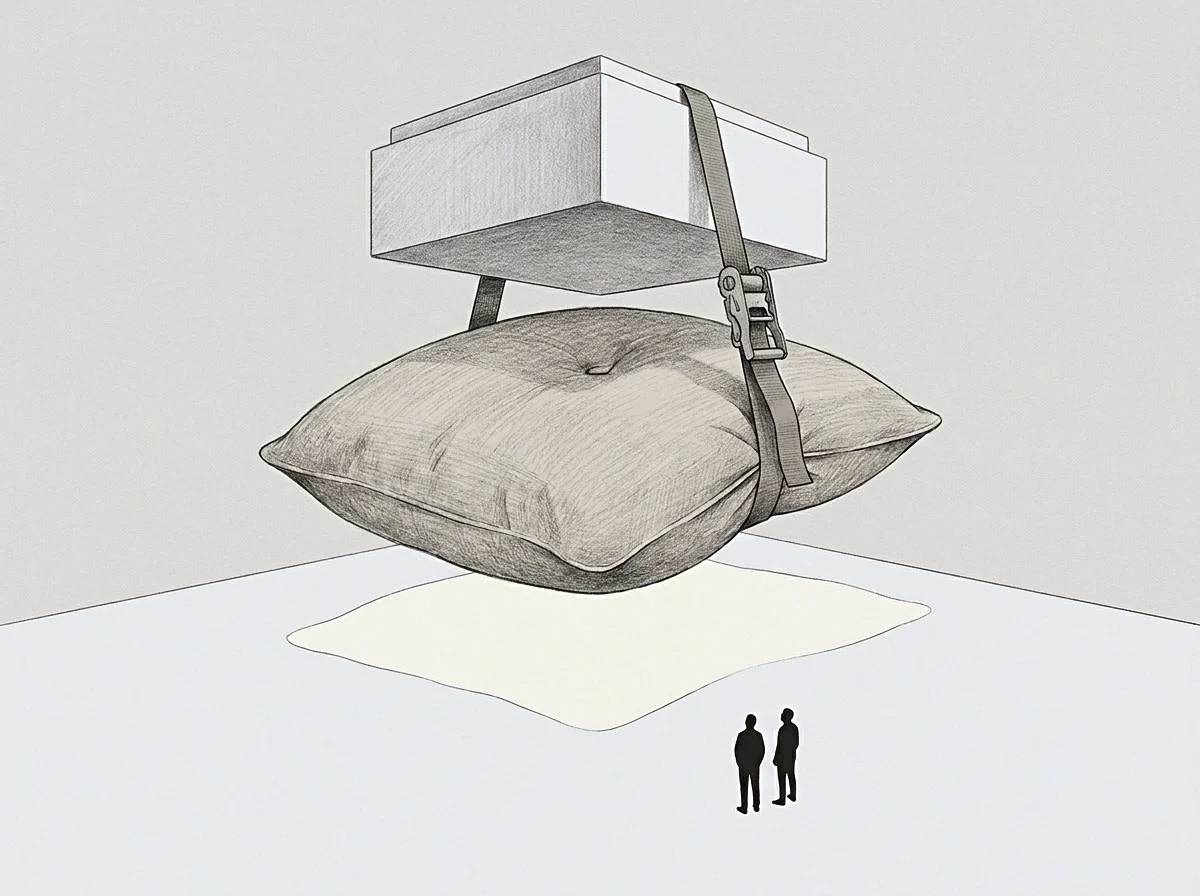
The baseline availability of uninterrupted attention and operational trust within a professional partnership constitutes relational stability. Regulatory capacity depends directly on this load-bearing constant, measuring the exact volume of cognitive hours a founder expends to maintain predictable interactions with cofounders. Underwriting corporate survival requires a predictable social baseline, meaning that human friction operates as a hidden tax on working memory.
Uncompensated social volatility exhausts physiological endurance, consuming attentional bandwidth that should otherwise service market demands. Co-regulation succeeds when partners absorb operational shocks without destabilising the collective nervous system, whereas self-regulation forces a solitary actor to bear every external hazard alone.
Social Friction
Interpersonal unpredictability converts professional disagreements into chronic biological alarm, triggering prolonged cortisol production and sleep disruption in founders. Attention fragments across dozens of micro-negotiations, leaving fewer hours available for deep technical or strategic work each week. Brain architecture prioritizes threat detection over long-term planning whenever social safety degrades inside the founding team.
Chronic uncertainty forces founders into defensive posture, rationing honesty to avoid triggering disproportionate emotional reactions from vulnerable peers.
Capacity Cost
Maintaining interpersonal equilibrium consumes specific blocks of daily operational hours that cannot be reclaimed for product development or customer acquisition. Attention shifts continuously toward monitoring partner sentiment, draining the cognitive reserve required for complex decision-making under uncertainty. Physiological recovery slows down significantly when chronic social threat keeps the nervous system in a permanent state of high alert.
Administrative mistakes multiply rapidly as exhaustion narrows mental bandwidth, increasing the financial penalties associated with delayed execution.
Operational Limit
Co-working capacity reaches a hard ceiling the moment interpersonal friction exceeds the regulatory threshold of the human participants. Collaboration collapses entirely when the energy required to sustain trust surpasses the total energy generated by the business venture itself. Systemic failure arrives not from market competition, but from the complete exhaustion of the relational capital that binds the partnership together.
Professional relationships function under strict thermodynamic limits, requiring constant ambient safety to prevent irreversible degradation of joint output.