
Setting Firm Structural Limits In Growing Companies
A stated structural limit transfers operational load to governance protocols, shielding executive capacity from continuous system pressure.
A stated structural limit transfers operational load to governance protocols, shielding executive capacity from continuous system pressure.

Throttled cognitive states represent working memory capacity saturation under open loop load, whereas clinical depression involves primary affective network deactivation.

Re-sensitizing glucocorticoid receptors requires restoring circadian hormone troughs through strict temporal gating of operational load and metabolic inputs.

Structural gating protocols preserve executive autonomic headroom by converting continuous real-time coregulation into bounded asynchronous communication threads.

Executive autonomic dysregulation under ungated demands truncates planning horizons and systematically skews capital allocation toward short-term loss avoidance.
Executive throttling intentionally drops open-ended tasks under peak allostatic load while clinical affective stalling represents generalized regulatory collapse.

System throttling is an adaptive physiological down-regulation caused by allostatic overload, distinct from clinical depression's neurochemical failure.

Vacating a high-demand executive seat collapses exogenous regulation, triggering autonomic neural throttling to protect physiological reserves from chronic overload.

Biological allostatic load reflects cumulative physiological wear from chronic stress, whereas clinical depression involves primary mood and cognitive disruption.

Extended high-stakes load downregulates central glucocorticoid receptor sensitivity, flattening cortisol rhythms and reducing executive processing headroom.

Autonomic recovery latency measures parasympathetic reactivation speed post-stress, directly predicting prefrontal executive headroom under allostatic load.

Executive capacity allocation under peak allostatic load requires down-regulating novel cognitive input to protect core procedural execution from total regulatory failure.

Unclosed operational loops consume executive cognitive headroom by occupying working memory slots until explicitly bounded by scope, dates, and terms.

Chronic executive demand elevates allostatic load, triggering autonomic throttling that suppresses cognitive headroom to preserve baseline physiological integrity.

Autonomic throttling is the prefrontal down-regulation triggered when ungated enterprise loops exceed executive metabolic capacity.
Autonomic throttling shuts down physical initiation to preserve depleted biology, while organizational apathy reflects low outcome valuation in a normal nervous system.

Missing social baseline regulation increases executive energy expenditure by forcing neural capacity to fund autonomic balance under load.

Concurrent ungated operational threads sustain sympathetic activation, flattening the diurnal cortisol slope and suppressing the morning awakening response.

Structural thread gating eliminates continuous autonomic vigilance from open cognitive loops, lowering peripheral vascular resistance to reverse allostatic load.
Persistent asynchronous work demands suppress nocturnal vagal recovery markers through continuous background vigilance and unbroken adrenergic tone.

Chronic operational ceilings blunt autonomic decay curves and suppress nocturnal blood pressure dipping by maintaining continuous sympathetic vascular tone.

Autonomic recovery latency expands when continuous operational demands prevent neuroendocrine clearance and parasympathetic restoration via vagal inhibition.
Autonomic nervous system recovery latency after leadership handovers depends on explicit operational gating to stop sympathetic arousal and restore vagal tone.

Ambiguous operational authority combined with raw telemetry creates sustained allostatic load by forcing constant anticipatory regulation across open cognitive loops.

Cognitive slot exhaustion accelerates when unresolved leadership lines saturate working memory buffers, triggering biological throttling to halt neural wear.
Gated governance replaces discretionary founder escalations with explicit thresholds, reducing chronic regulatory wear by bounding operational concurrency.

Continuous asynchronous telemetry streams force executive authority thresholds to degrade by converting ambient operational visibility into implicit approval loops.
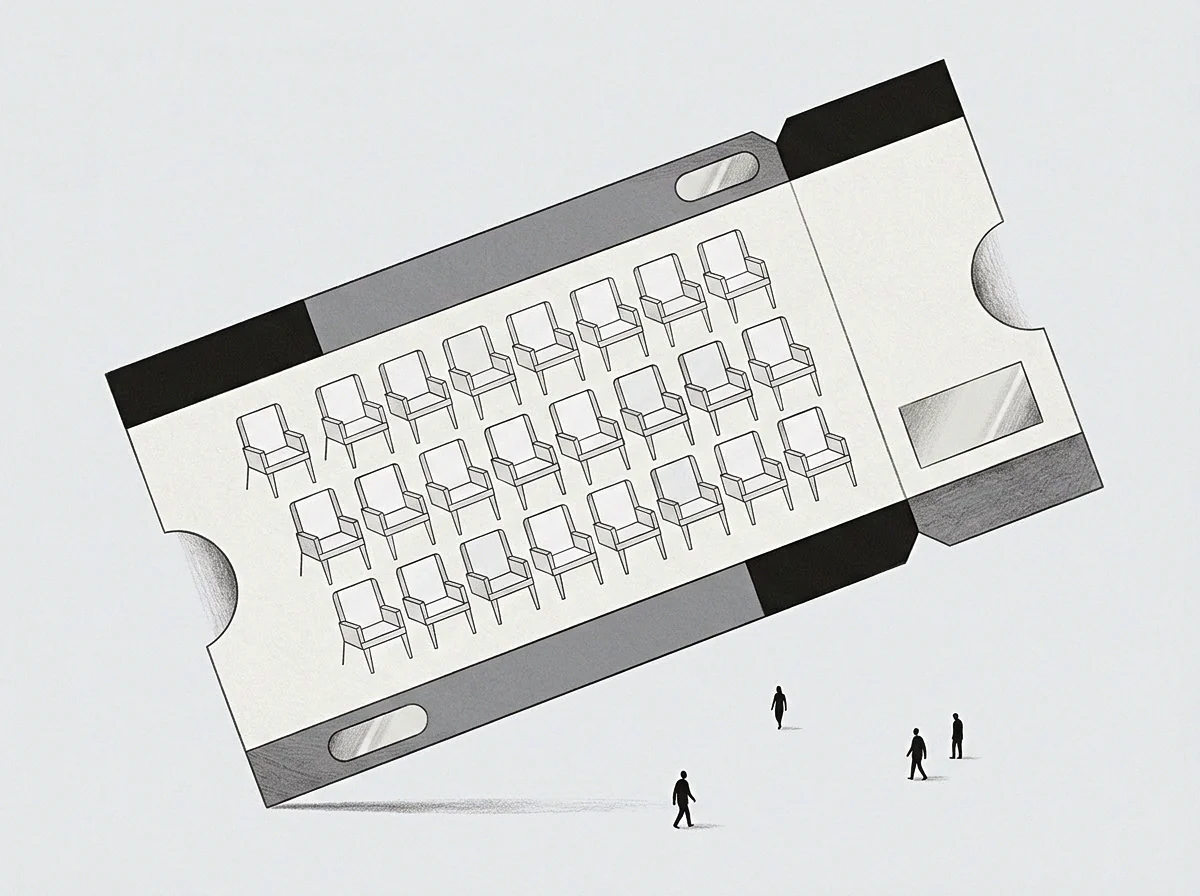
High accountability seats cap cognitive throughput at two to four concurrent open loops before ungated liability forces physiological throttling.

Early venture leadership preserves decision capacity by gating operational intake, parking open loops, and treating working memory as a bounded structural resource.

Allostatic overload degrades prefrontal risk analysis in investment partners, forcing depleted committees to substitute thorough diligence with automatic consensus.
The terms are written where they belong. Each field holds three desks, and every entry a desk writes raises the terms it uses, each term given a meaning, a mechanism and the places it appears. The record on these pages stays first person and hand made; the fields grow the nomenclature.