

Basal Cortisol Dynamics Following Years Of Chronic Organizational Threat
Years of continuous organizational threat flatten the diurnal cortisol slope, driving adrenal hypocortisolemia and systemic inflammatory fatigue.

Years of continuous organizational threat flatten the diurnal cortisol slope, driving adrenal hypocortisolemia and systemic inflammatory fatigue.

Unbuffered leaders absorb group panic at private metabolic cost, accelerating somatic depletion while subordinates borrow calm without sharing systemic wear.

Severe physiological depletion shifts neural threat processing to solitary self-regulation, forcing acquired relational models to collapse into habitual operational templates.

Structural gates protect leadership seats by filtering unconstrained operational threads before transactional volume exceeds biological allostatic limits.

Allostatic load measures physical wear from sustained regulation while cognitive loop volume quantifies active un-gated memory threads in operators.

Social baseline theory demonstrates that executive allostatic burnout occurs when continuous solo regulation forces perpetual neural overdraft without co-regulatory relief.

Solitary nervous system regulation increases metabolic baseline expenditure by treating isolation as an active threat requiring continuous sympathetic throttling.

Executive throttling is a protective prefrontal brownout caused by concurrency overload, distinct from the global affective collapse of clinical depression.

Systemic availability limits are derived directly from explicit governance terms that convert operational pressure into structural resistance.

Unfunded co-regulation demands drain executive working memory, forcing physiological throttling that degrades strategic capital allocation.

An executive system under load transfers operational pressure by establishing explicit throttling boundaries rather than allowing downstream actors to derive availability from silence.

Internal working models govern executive regulation budgets by dictating whether stress is shared through co-regulation or paid individually via allostatic load.

Scaling co-founders transfer operational load when execution limits are stated as explicit structural terms rather than absorbed through individual endurance.

Throttled cognitive states represent working memory capacity saturation under open loop load, whereas clinical depression involves primary affective network deactivation.

Systemic overload forces founding teams into metabolic exhaustion unless unyielding structural terms replace individual willpower as operational limits.

Chronic somatic exhaustion converts primary operator capacity into unhedged enterprise risk, discounting future operating cash flows through degraded execution.

Hard operating boundaries protect depleted executive seats by mechanically filtering incoming load through latency buffers and rigid structural terms.

Enterprise decision latency under severe exhaustion measures structural processing lag caused by allostatic depletion, shifting choices toward default outcomes.

Explicit operational terms prevent systemic load transfer by establishing physical transfer functions before executive floor capacity setpoints are breached.

Autonomic recovery rate measures the velocity of post-stress parasympathetic reactivation, quantifying executive wear through vagal rebound and nocturnal heart rate dipping.

Derived availability protocols lower allostatic load across high pressure teams by replacing manual interruption triage with deterministic latency rules.
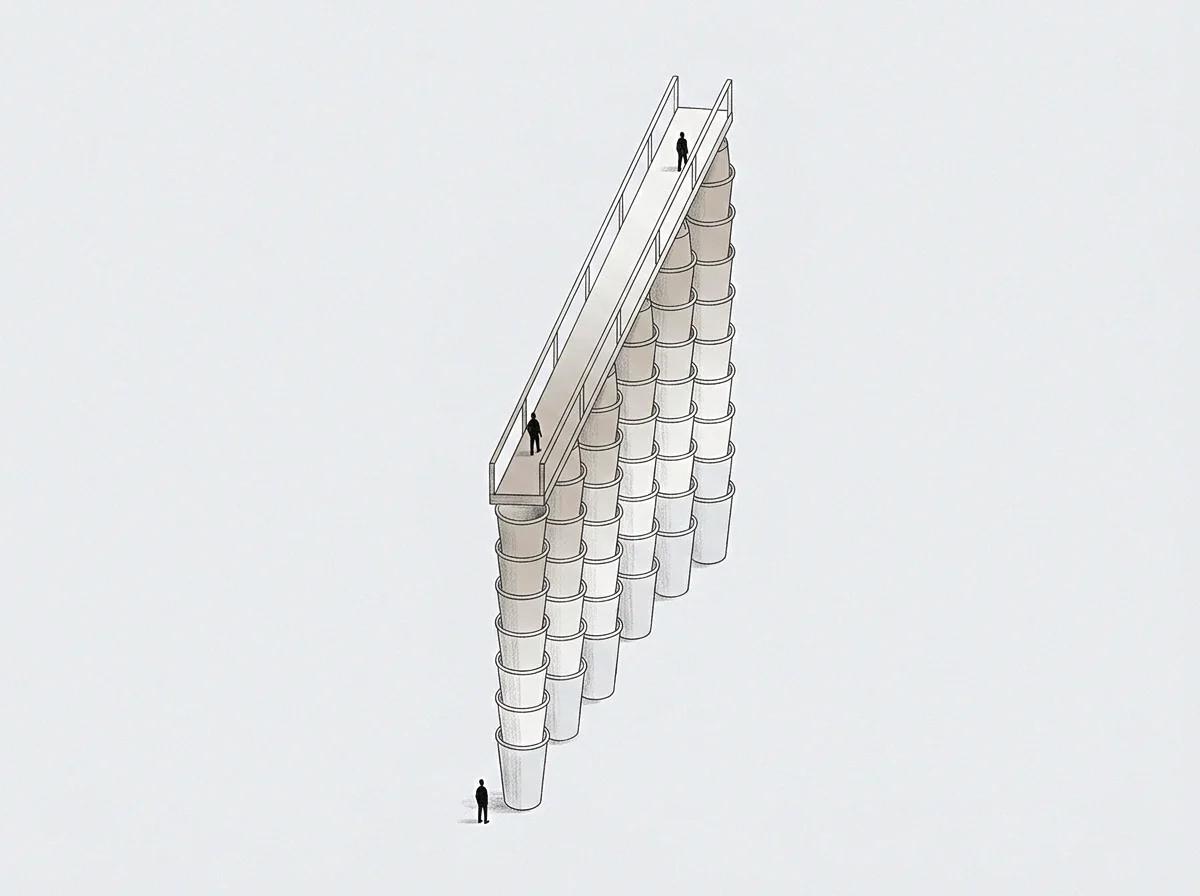
Prolonged organizational panic causes glucocorticoid receptor downregulation and chronic autonomic hyper-arousal, requiring strict loop closure for resensitization.

Stated priority limits keep operational requests out of executive headroom by converting personal availability into explicit, system-enforced boundaries.

Executive throttling selectively sheds peripheral communication to preserve high-stakes processing, while depressive exhaustion globally degrades cognitive output.

Fast-growing corporate structures transfer operational load to responsive executives until explicit structural boundaries redirect coordination overhead.

Systemic availability limits derive directly from explicit governance terms that govern latency windows, concurrency caps, and intake throttling protocols.

Allostatic load measures cumulative biological wear from chronic regulatory activation, requiring structural thread limits rather than psychological rest to rebuild capacity.
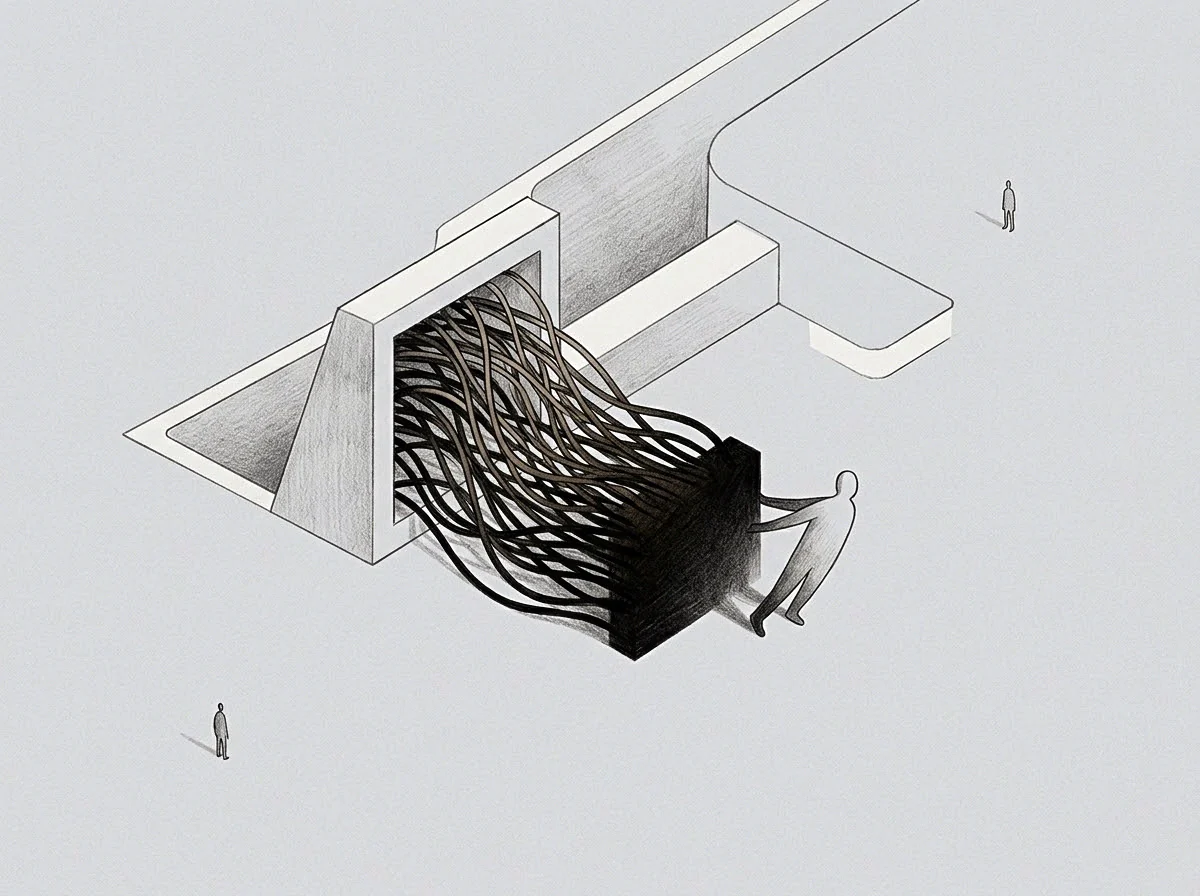
Operational load in scaling teams flows toward unstated limits until explicit terms convert personal capacity into bounded structural architecture.

Chronic physiological saturation degrades prefrontal networks, causing compounding operational delays and strategic errors across dependent business units.

Stated operational terms convert active evaluation into passive rule execution, preserving executive cognitive headroom by preventing continuous real-time load transfer.
The terms are written where they belong. Each field holds three desks, and every entry a desk writes raises the terms it uses, each term given a meaning, a mechanism and the places it appears. The record on these pages stays first person and hand made; the fields grow the nomenclature.