

A Stated Limit Is A Wall Not A Person
A stated limit functions as an immovable structural wall that redirects systemic strain back to its source rather than absorbing it through personal exhaustion.
A stated limit functions as an immovable structural wall that redirects systemic strain back to its source rather than absorbing it through personal exhaustion.

A stated structural limit transfers operational load to governance protocols, shielding executive capacity from continuous system pressure.

Stated operational terms convert active evaluation into passive rule execution, preserving executive cognitive headroom by preventing continuous real-time load transfer.
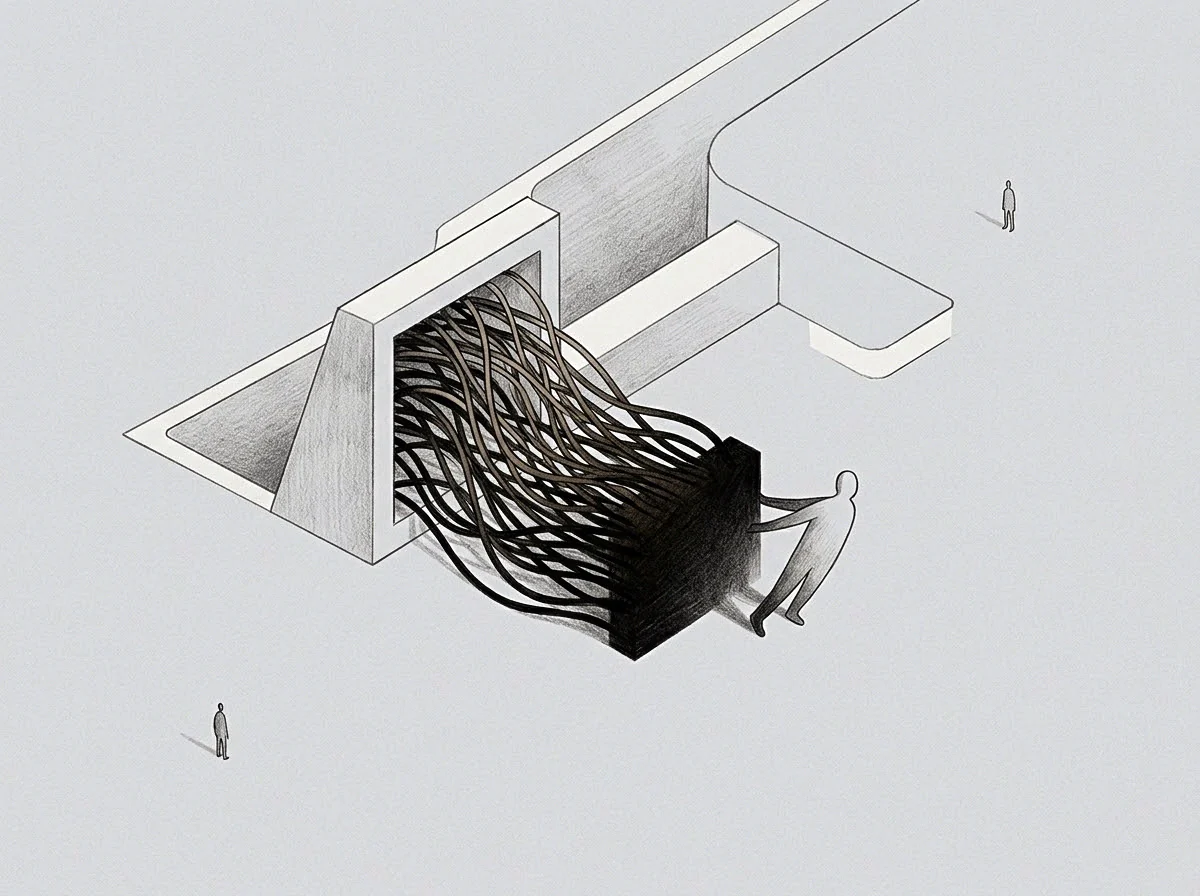
Operational load in scaling teams flows toward unstated limits until explicit terms convert personal capacity into bounded structural architecture.

Systemic availability limits derive directly from explicit governance terms that govern latency windows, concurrency caps, and intake throttling protocols.

Stated priority limits keep operational requests out of executive headroom by converting personal availability into explicit, system-enforced boundaries.

Hard operating boundaries protect depleted executive seats by mechanically filtering incoming load through latency buffers and rigid structural terms.

Systemic overload forces founding teams into metabolic exhaustion unless unyielding structural terms replace individual willpower as operational limits.

Scaling co-founders transfer operational load when execution limits are stated as explicit structural terms rather than absorbed through individual endurance.

An executive system under load transfers operational pressure by establishing explicit throttling boundaries rather than allowing downstream actors to derive availability from silence.

Systemic availability limits are derived directly from explicit governance terms that convert operational pressure into structural resistance.

Stated capacity bounds transfer operational load and state gated authorization protects governance integrity during acute stress.

Hard boundaries protect depleted executives by replacing personal refusal with clear unyielding structural terms.

Executive centralization combined with fatigue introduces decision latency that impairs asset returns and raises balance sheet operational risk discount factors.

Structural term partitioning converts founder coregulation into explicit domain boundaries, protecting cognitive capacity by routing load onto defined operational objects.

Decoupling scaling leadership seats shifts execution from personal founder regulation to structural limit walls and state gated operational handovers.

An executive limit acts as a structural term that redirects incoming operational load once personal regulation reaches setpoint thresholds.

A stated limit acts as a structural wall, forcing a scaling system to distribute load rather than draining the regulator to biological exhaustion.

State-gated throttling boundaries lock intake channels during capacity deficits, forcing downstream execution teams to build localized resolution loops.

Systemic boundaries protect venture capacity by gating operational acts on objective system state metrics rather than continuous interpersonal decision making under load.

Contractual derivation of executive capacity boundaries converts informal stakeholder demands into bounded, procedural covenants to preserve executive cognitive function.

Governance terms replace biological load absorption with rigid gates, shifting unmanaged operational volume into latency and exposing structural failure thresholds.
Codified decision thresholds protect leadership capacity by converting real-time discretionary approvals into automated, rule-based operational setpoints.
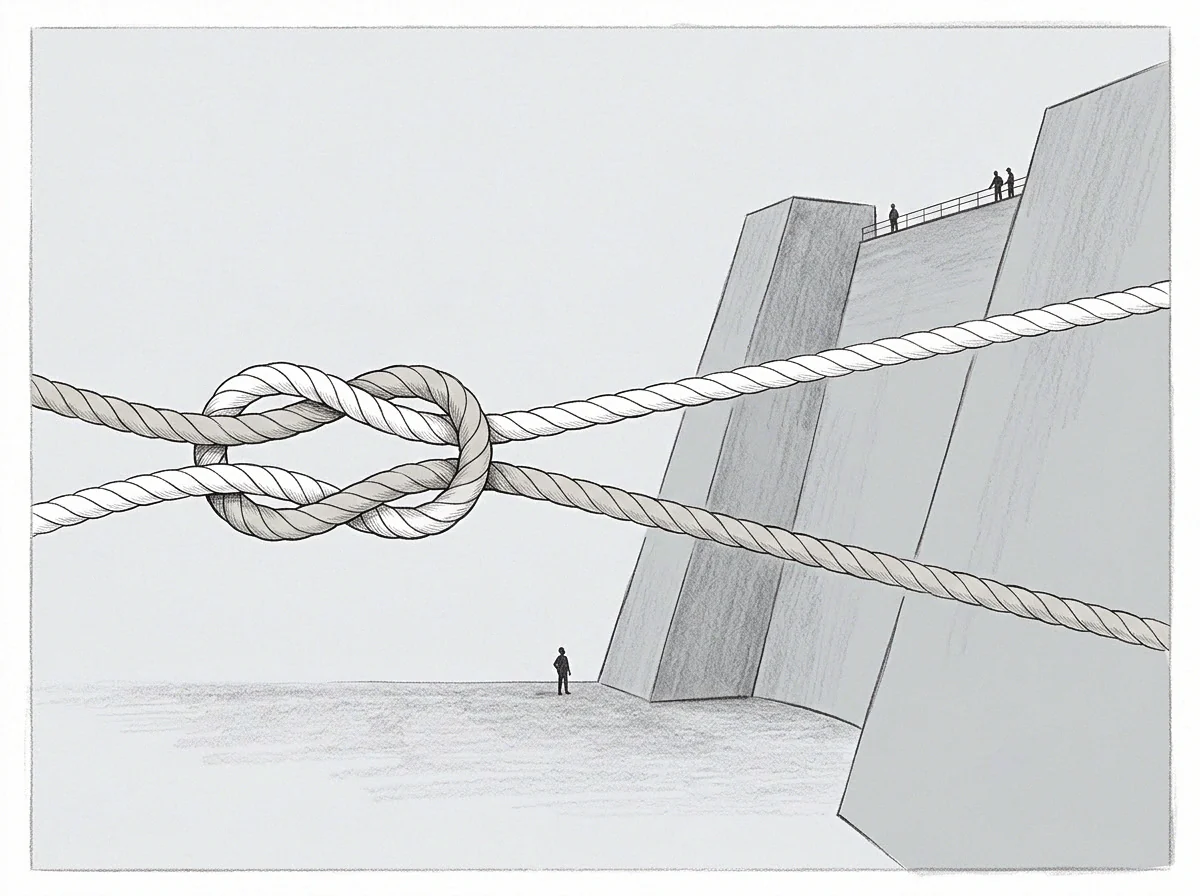
Explicit monetary and operational autonomy boundaries prevent executive friction by stopping unnecessary escalations to leadership seats.

Stated decision limits create explicit authorization bounds that automatically transfer routine choices to functional leads during rapid scale pressure.

Capacity limits derive directly from explicit operational terms that convert human endurance bounds into objective organizational walls.

Executive teams operate on legible structural limits and unspoken relational contracts, transferring operational stress onto personal capacity until explicit terms set walls.

Bounded delegation protocols prevent cognitive overload by replacing continuous discretionary review with stated terms and explicit concurrency ceilings.

Stated operational intake limits convert incoming channel load into structured queue latency rather than internal cognitive depletion.
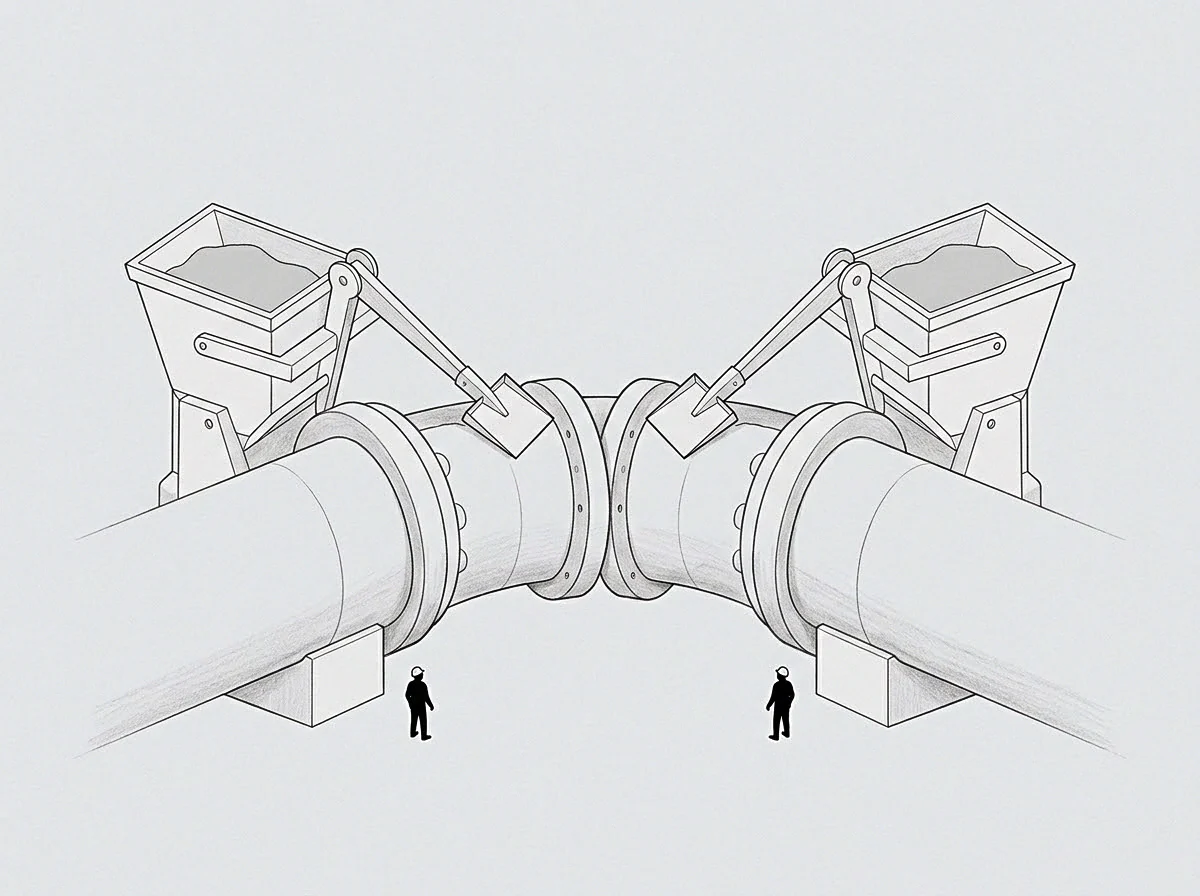
Delayed response protocols convert continuous real-time engineering interruptions into asynchronous batch queues to preserve focus and reduce cognitive load.
The terms are written where they belong. Each field holds three desks, and every entry a desk writes raises the terms it uses, each term given a meaning, a mechanism and the places it appears. The record on these pages stays first person and hand made; the fields grow the nomenclature.