

Physiological Stress Downregulation Versus Psychiatric Depression In Executive Leadership
Physiological stress downregulation reduces volitional capacity to protect neuroendocrine systems under unclosed executive load.
Physiological stress downregulation reduces volitional capacity to protect neuroendocrine systems under unclosed executive load.

Automated setpoints transfer operational sign-offs to secondary proxies whenever queue latency metrics cross predefined physiological limits.

Chronic operational stress down-regulates relational safety receptors, but structured non-demanding co-regulation systematically restores earned security.

Neuroendocrine throttling downregulates hypothalamic receptors to preserve baseline physiology when operational uncertainty denies the nervous system closure.
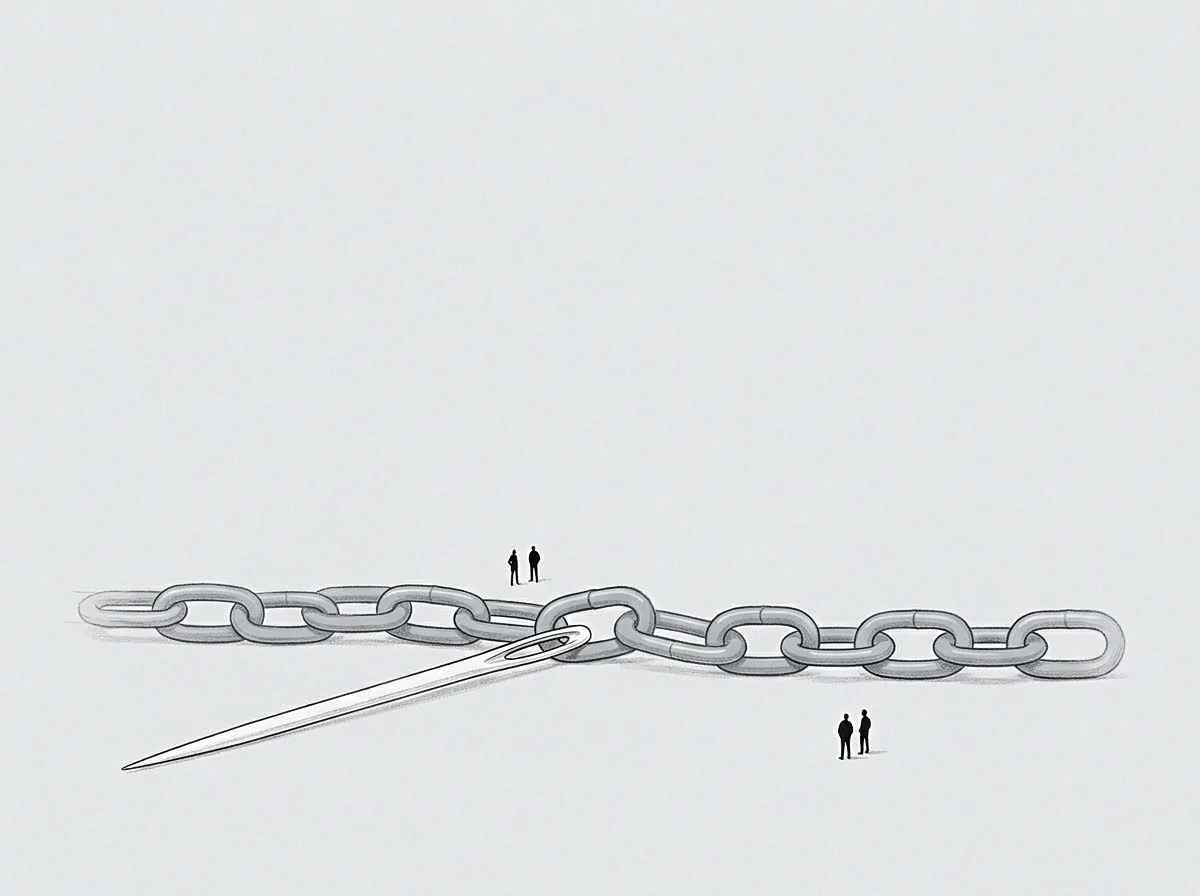
Salivary cortisol awakening curves reveal chronic allostatic wear by tracking whether morning adrenocortical activation surges adaptively or flattens under load.

Coregulation rebuilding requires transitioning from solitary neural budgeting to reciprocal presence that distributes metabolic loads across trusted bodies.

Pre-set governance parameters allocate authority away from depleted executive seats to rested secondary operators before cognitive exhaustion impairs sign-off quality.

Extended operational overload converts social proximity from a regulatory subsidy into an incoming load, requiring repeated safe experience to rebuild baseline capacity.

The cortisol awakening response accelerates under acute endocrine activation as anticipatory neural inputs drive rapid adrenocortical steroid secretion.
Executive capacity limits emerge when stated operational limit conditions establish explicit walls that stop external system load transfer.

Parametric delegation architectures offload executive function to external artifacts, eliminating continuous verification during allostatic overload.

Reciprocal regulation in high limit systems requires developing neural receptor capacity to ingest external calm rather than using boundaries for isolated throttling.

Autonomic throttling shuts down physical initiation to preserve depleted biology, while organizational apathy reflects low outcome valuation in a normal nervous system.
Explicit operational limits halt automatic risk transfer by forcing counterparties to build internal capacity rather than consuming external responsiveness.

Neuroendocrine exhaustion in single point leaders results from chronic unbuffered operational demand, requiring structural input gating to restore allostatic balance.

Reconciling exploratory branches with fixed deadlines requires quarantining unhardened code while extracting verified specifications for subsequent releases.

Decoupling from real time executive demands initiates a neuroendocrine downregulation lag where prefrontal recovery depends on complete thread clearance.

Operational filters reduce executive cortisol wear by converting ungated incoming threads into structured tasks with defined scope and completion dates.

Stated concurrency limits restrict context switching across isolated operational threads to prevent cross-stream allostatic load accumulation.

Solitary threat monitoring forces continuous autonomic elevation, whereas social baseline proximity distributes regulation costs across trusted counterparties.

Allostatic load transfers across executive coalitions when dysregulated officers continuously rely on baseline-stable peers to down-regulate sympathetic arousal.

An isolation interval breaks when external signaling penetrates set boundaries, requiring explicit state gated filters to reestablish focused synthesis.
Calibrated interpersonal receptivity protects executive autonomic reserves by replacing unbudgeted emotional containment with structured operational intake.

Setting structural intake limits caps concurrent open cognitive threads, preventing elevated allostatic load and maintaining executive strategic capacity.
Proximity to a steady partner lowers the metabolic cost of baseline threat regulation by offloading prefrontal expenditure onto a shared physiological baseline.

Calibrating operating limits involves bounding decision scope, setting hard escalation thresholds, and gating ungated loops under asymmetric authority.
Gating real time availability limits active cognitive threads, preventing executive physiological collapse while driving distributed team self-regulation.

Executive team autonomy depends on replacing direct founder co-regulation with structural governance boundaries that absorb operational risk stress.

Stated response limits decouple intake from execution, reducing allostatic wear by converting continuous interruptions into bounded processing windows.
Social baseline theory shows human brains treat proximate reliable state as energy savings, concentrating operational strain onto whoever remains regulated.
The terms are written where they belong. Each field holds three desks, and every entry a desk writes raises the terms it uses, each term given a meaning, a mechanism and the places it appears. The record on these pages stays first person and hand made; the fields grow the nomenclature.