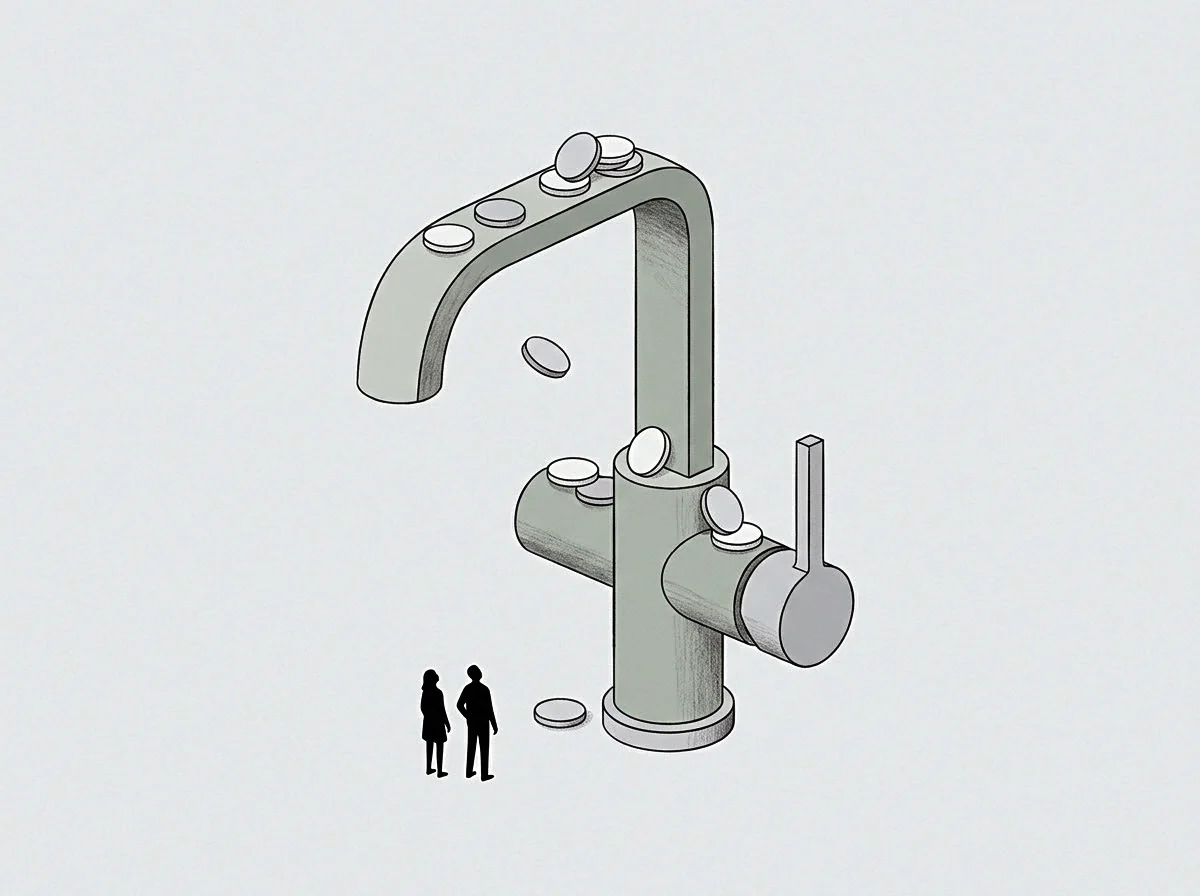
The brain budgets regulation as if a reliable other is present. Self-regulation alone is the expensive mode and proximity is the cheap one, which is why people attach to a stable person’s state and read the borrowed calm as their own. A regulator proven under load attracts more load.
Updating executive authority models under continuous load demands structural operational buffers that force mutual regulation and lower solitary allostatic expenditure.
Unreciprocated social baseline regulation forces a leader's brain to expend continuous metabolic energy on top-down inhibition, raising allostatic load.
Functioning as a primary relational regulator suppresses autonomic recovery and elevates metabolic expenditure by replacing co-regulatory relief with solo buffering.
Social baseline theory shows that solitary leadership forces the nervous system to spend internal metabolic energy on threat regulation normally shared with others.
Isolated nervous system regulation forces the brain to spend extra metabolic energy on self-soothing, accelerating physiological wear under operational load.
Internal working models update only when unhedged, symmetrical operational risk forces the brain to abandon expectations of solitary threat absorption.
Chronic operational burnout forces the autonomic nervous system to process partner presence as operational load rather than baseline calm, requiring structured non-demanding micro-exchanges to rebuild somatic receptivity over time.
Predictable proximity and explicit autonomic limits reset parasympathetic baseline by lowering the metabolic cost of self-regulation in high-stress partnerships.
When company builders act as an emotional baseline without stating capacity caps, team stability relies on borrowed calm that exhausts executive neural reserves.
Shared fatigue converts workspace proximity from a co-regulatory asset into a continuous physiological evaluation burden that suppresses heart rate variability.
Extended solitary founder tenure locks threat processing into high gain, which down-regulates only through repeated operational co-regulation with a stable peer.
Solitary technical building removes environmental co-regulation, forcing the brain to expend metabolic energy on self-regulation and throttling cognitive headroom.
Operational panic concentrates into the calmest executive present whose nervous system absorbs the metabolic cost of stabilizing the entire leadership circle.
Chronic unilateral regulation exhausts hypothalamic and autonomic systems, producing severe hypocortisolemia and vagal collapse upon partnership rupture.
Social baseline economics shows that professional dyads share regulatory load, where one partner's steady physiological state lowers another's metabolic stress cost.
Solitary allostatic containment elevates metabolic expenditure by forcing continuous self-regulation without the biological cost reduction of shared presence.
Intellectual understanding fails to soothe autonomic threat because subcortical regulation requires repeated relational safety signals rather than cognitive insight.
Six fields, each writing its own terms
The terms are written where they belong. Each field holds three desks, and every entry a desk writes raises the terms it uses, each term given a meaning, a mechanism and the places it appears. The record on these pages stays first person and hand made; the fields grow the nomenclature.